
Overview
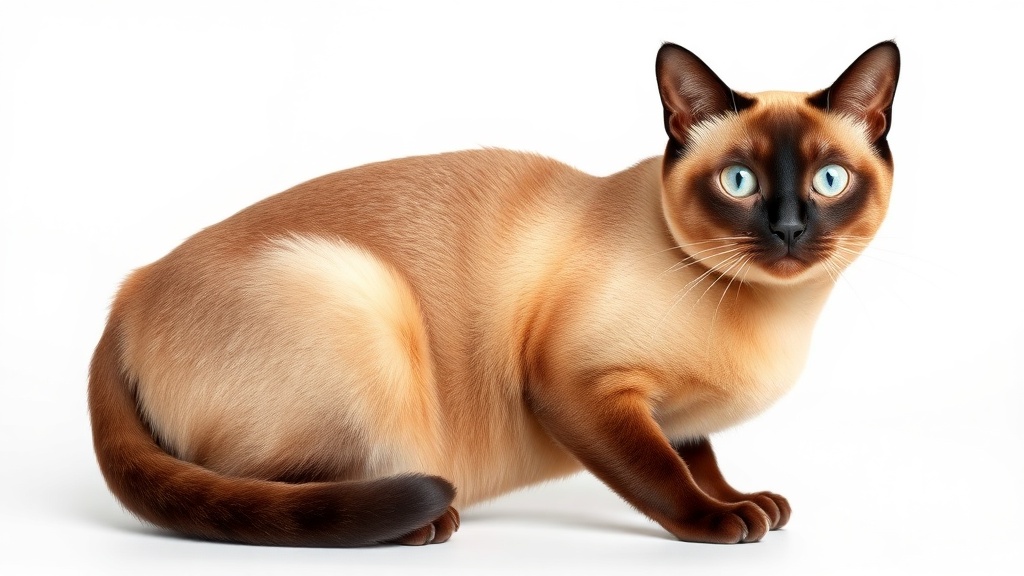
The Burmese cat, renowned for its affectionate and playful nature, is a medium-sized breed with a rich history and charming personality, making it a favorite among cat enthusiasts.
History & Origin
Originating from Burma (now Myanmar), the Burmese cat was brought to the United States in the 1930s. Dr. Joseph Thompson is credited with developing the breed by crossing a female cat from Burma with Siamese cats, resulting in the modern Burmese we know today.
Physical Characteristics
Burmese cats are medium-sized, typically weighing between 4 to 6 kilograms and standing 23 to 28 centimeters tall. They have a muscular build, a round head, and expressive eyes that come in shades of gold or yellow.
Temperament & Personality
Burmese cats are known for their affectionate and social nature. They thrive on human interaction and enjoy being the center of attention. Their playful and intelligent demeanor makes them fun companions, and they are often vocal, communicating with soft, sweet voices.
Care Requirements
Grooming
Burmese cats have short, fine coats that require minimal grooming. Weekly brushing is sufficient to keep their coat healthy and shiny.
Exercise
These cats are active and playful, requiring regular playtime to satisfy their exercise needs. Interactive toys and climbing structures are recommended.
Diet
A balanced diet rich in protein is essential. High-quality commercial cat food, supplemented with occasional treats, will keep them healthy.
Training
Burmese cats are intelligent and can be trained to perform simple tricks and commands. Positive reinforcement techniques work best.
Health & Common Issues
Burmese cats are generally healthy but can be prone to specific genetic conditions such as cranial deformities, diabetes, and hypokalemia.
Training Tips
Start training early and be consistent. Use rewards and praise to encourage desired behaviors. Avoid harsh discipline as these cats are sensitive.
Is This Breed Right For You?
Burmese cats are ideal for families and individuals who can provide ample attention and companionship. They adapt well to various living situations and are good with children and other pets.